Managing Like It's NCAA Football 06
Why Do Hospitals Have Good Software Engineers?
TL;DR
Hospitals can attract strong software engineers when managers build teams the way a good dynasty-mode coach in NCAA Football 06 builds a football program: by setting a clear strategy, developing people, enforcing standards, and recruiting for fit instead of relying on a big budget alone.

Introduction
I have been working at a cancer hospital for the past few years. Something that feels like a bit of a paradox in our capitalist world is why a hospital can have so many talented software engineers. It’s not like people don’t have options. I make a good living, but I work in New York City and there are big tech and finance companies that can easily beat any salary our hospital could provide. I often hear people complain that it’s difficult to find good software engineers, but where I work, they seem relatively easy to find. Don’t get me wrong, there are bad software engineers where I work, but I have found them to be a relatively small portion of the company. I had a hard time understanding this until I became a manager. I realized I was worrying about the same kinds of things that were required when playing dynasty mode in NCAA Football 06.
Manager Simulator
When I was a scrawny high school nerd, I used to play NCAA Football 06 for hours day after day to the point where my mom would worry about how much time I spent in front of the TV. Now you might assume that playing a football video game meant that I was playing the football part, but you would be wrong. While I did spend time on that, I spent most of my time playing dynasty mode. In dynasty mode, you essentially role-play as the head coach of a college football program off the field, but you still control the players as you normally would when playing the football games. I used to play dynasty mode so much that my dad would ask, “Do you ever play the football part of the football game?” So what made me want to play dynasty mode so much? It was the enjoyment of taking a struggling football program and, through player recruiting, development, and discipline in alignment with a coaching strategy, turning the college into a winning program. In other words, I was playing manager simulator.
The Dynasty Game Loop
To see what I mean by dynasty mode being a manager simulator, let’s take a look at the game loop.
Stakeholders
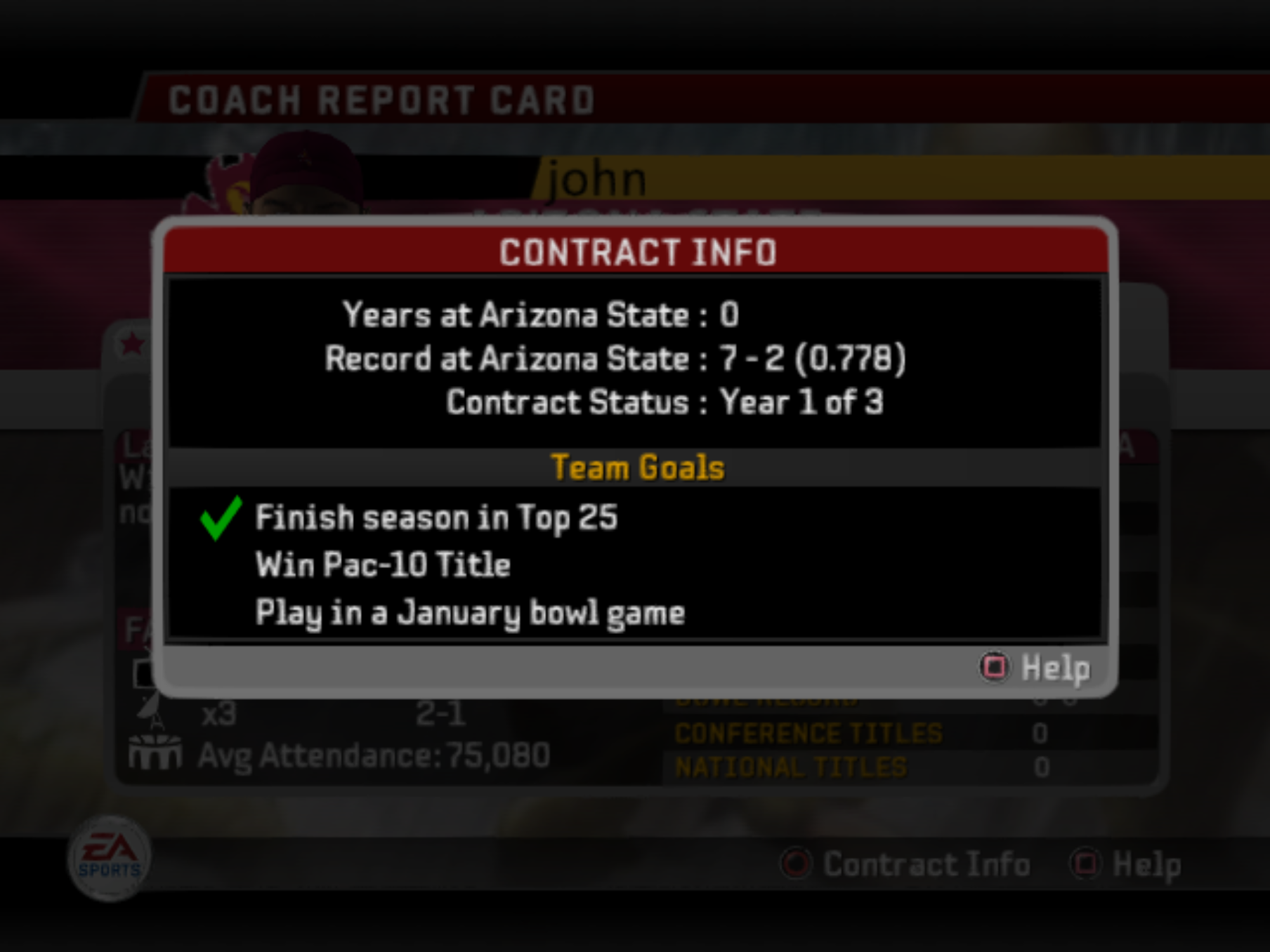
In the world of sports, losing is not tolerated. NCAA Football 06 simulates this by having contract goals. The more prestigious your football program is, the greater the expectations will be. Failure to achieve your team goals will impact your job security. If your job security gets too low, then you’ll be fired. Winning also impacts your coach’s prestige, which affects your coach’s ability to attract talent.
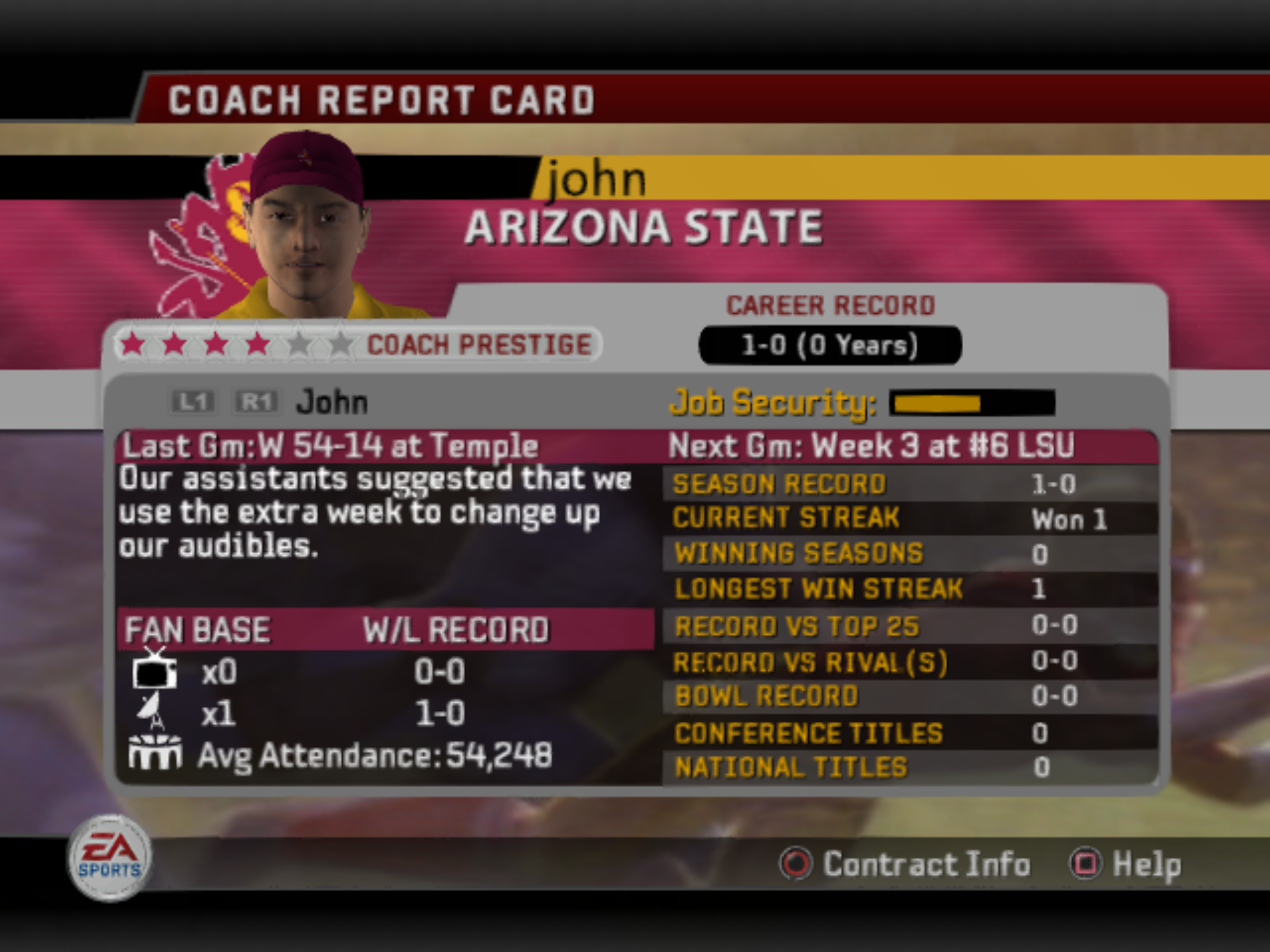
Weaker teams will expect less at first, but if you continue to meet or exceed expectations, then the expectations on your coach will also continue to grow.
When it comes to being a software engineering manager, you definitely feel a similar kind of pressure. If you take over a very successful engineering team, and they start to fail, then all the blame will go to you. Similarly, if you have continued success, then you will be expected to have your team continue to operate at a higher level.
Strategizing
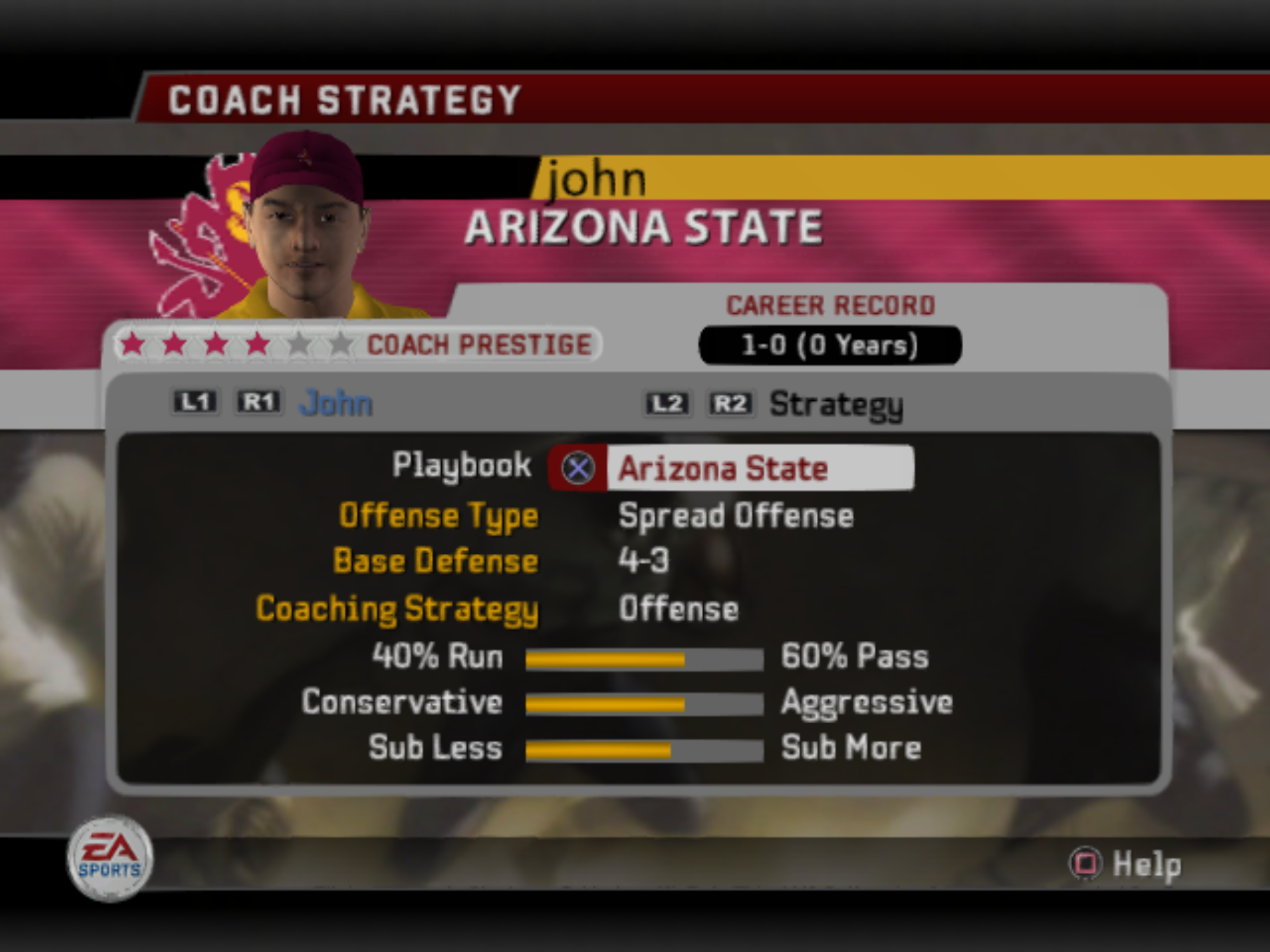
When you first start a new game in dynasty mode, you have to come up with a strategy for your team. It’s good to take a look at your team and figure out what your strengths and weaknesses are. Does your team have a good running back? Does your quarterback like to run or pass? Are you stronger on offense or defense? Once you take these things into account, you can modify your coaching play-calling strategy. You can even create custom playbooks!
When managing engineers, it is very important to know your software team’s strengths and weaknesses. If your strategy is to do the same thing without accounting for your team’s capabilities, then you risk either overwhelming your team or squandering their talent.
Allocating Resources
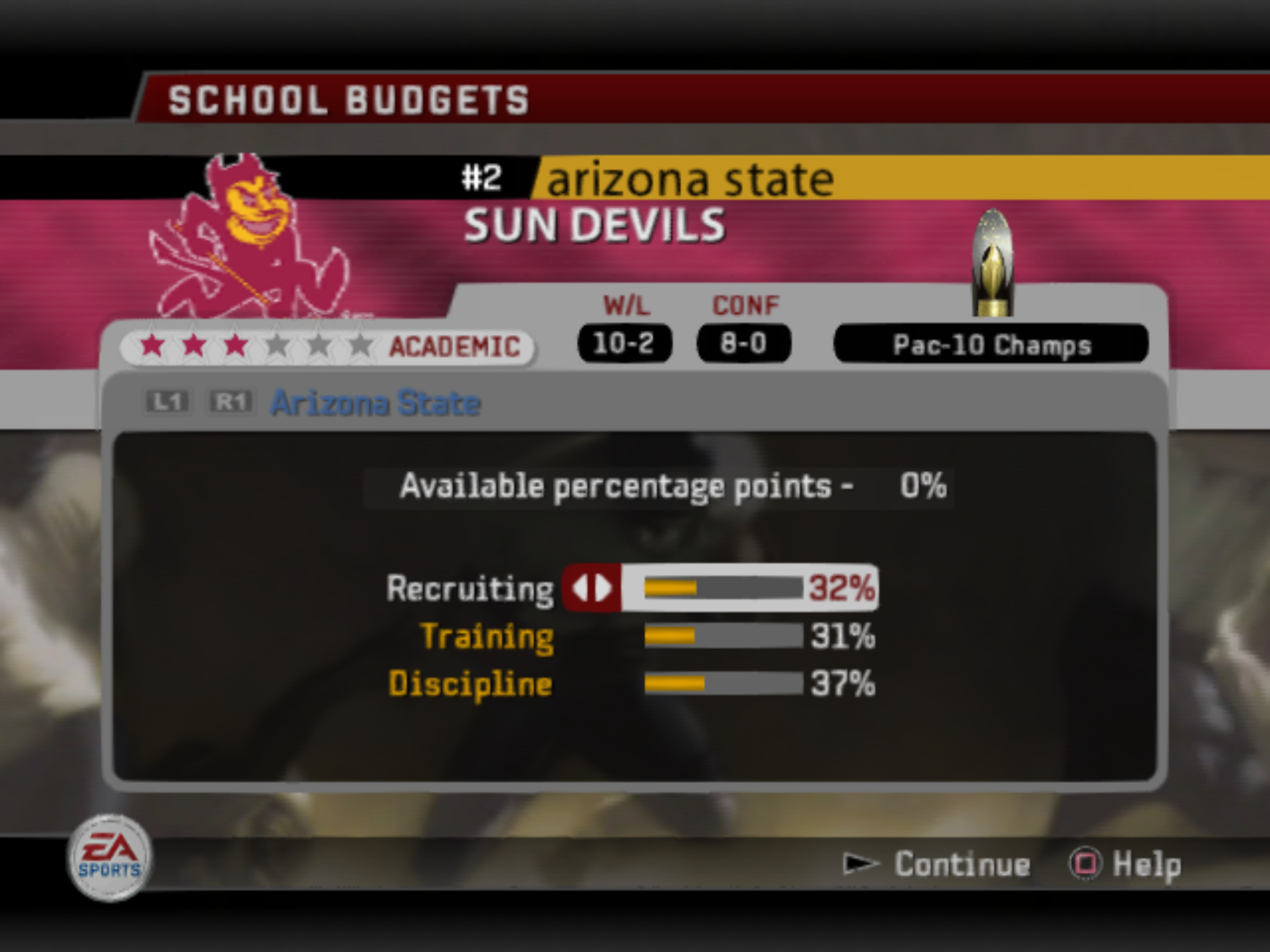
Admittedly, the system for the budget in NCAA Football 06 is very simplistic. You have to allocate between recruiting players, training players, and disciplining players if they break the team rules. The nice thing about the budget is that it forces you to prioritize what you want to do with limited resources. You can only change the budget once a year, so if you realize you do not have the budget to recruit the players you need, then you end up losing them to rival schools.
While the budgeting in the game is simple, it is a common mechanic in strategy games. You will find that a good strategy game is built on making the best choice given other tempting options.
When managing, you too will have to make difficult choices that you cannot go back on. You may have to think about doing a system rewrite vs. adding more features. You also may not have the budget to hire new people, so you will have to spend more time training and developing the people you already have.
Let’s now look more into each budget item.
Discipline
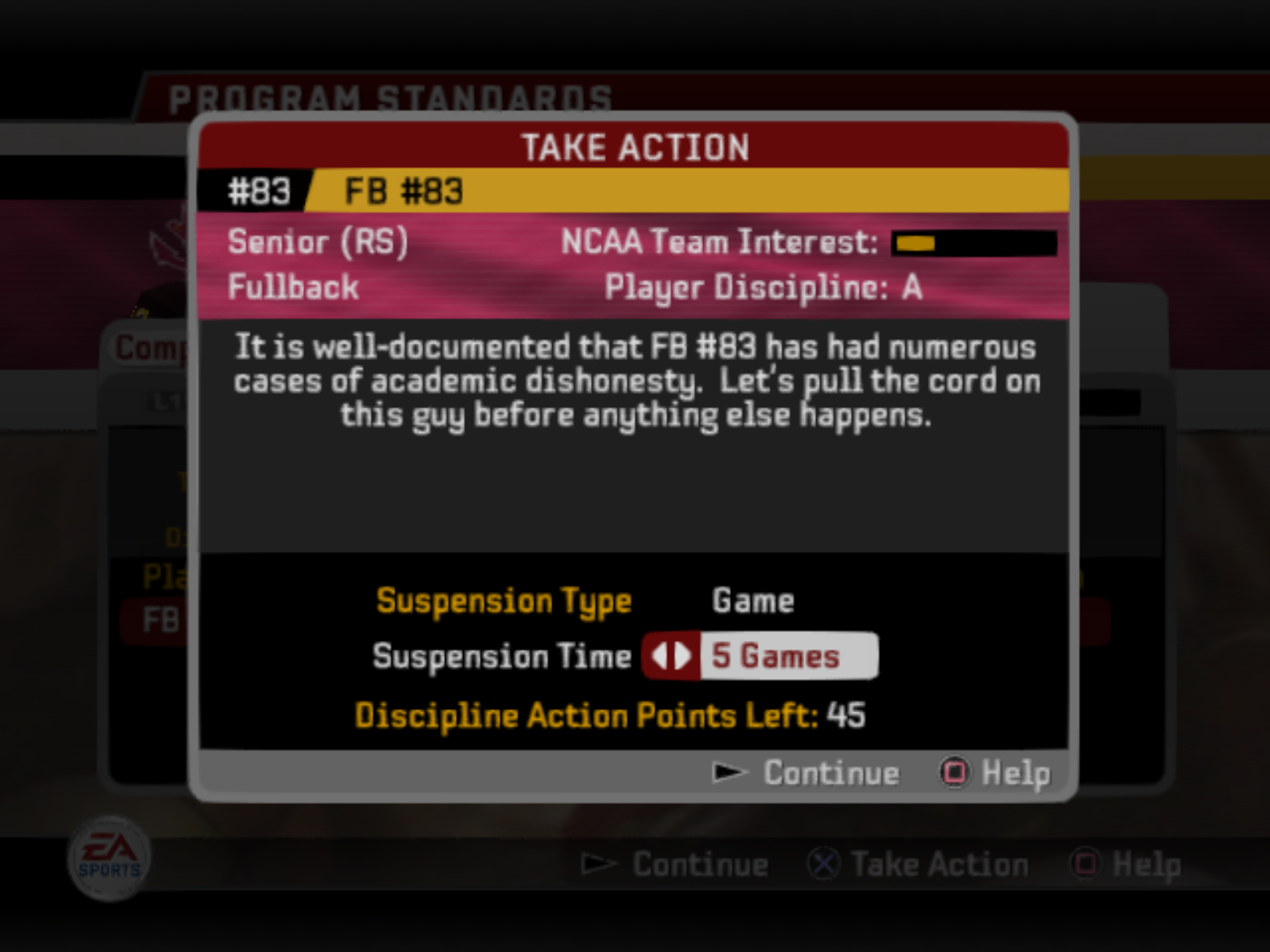
From time to time, your players will break team rules. This is a rated E game so nothing too scandalous ever happens, but you still have to address the problem. Whenever a player breaks team rules, you have to decide if you want to suspend them, and if so, how long. If you go too easy on your players, then the odds of more players breaking the rules go up, and you will get sanctioned by the NCAA. If you are too hard on your players then you obviously may not have starters playing, and you may run out of your discipline budget, which means you cannot suspend anyone else. I know it makes no sense to not allow suspensions to happen if you have no budget, but it’s a video game!
As a regular manager, you too have to worry about how you deal with people not meeting your expectations. If you fail to deal with problematic team members, then you will have a lot of issues keeping the team together. For me, I think it is important to have a solid foundation for your values. Your values will be tested from time to time, and if you are inconsistent with discipline on your team, they will lose respect for you and stop listening to you altogether.
Training
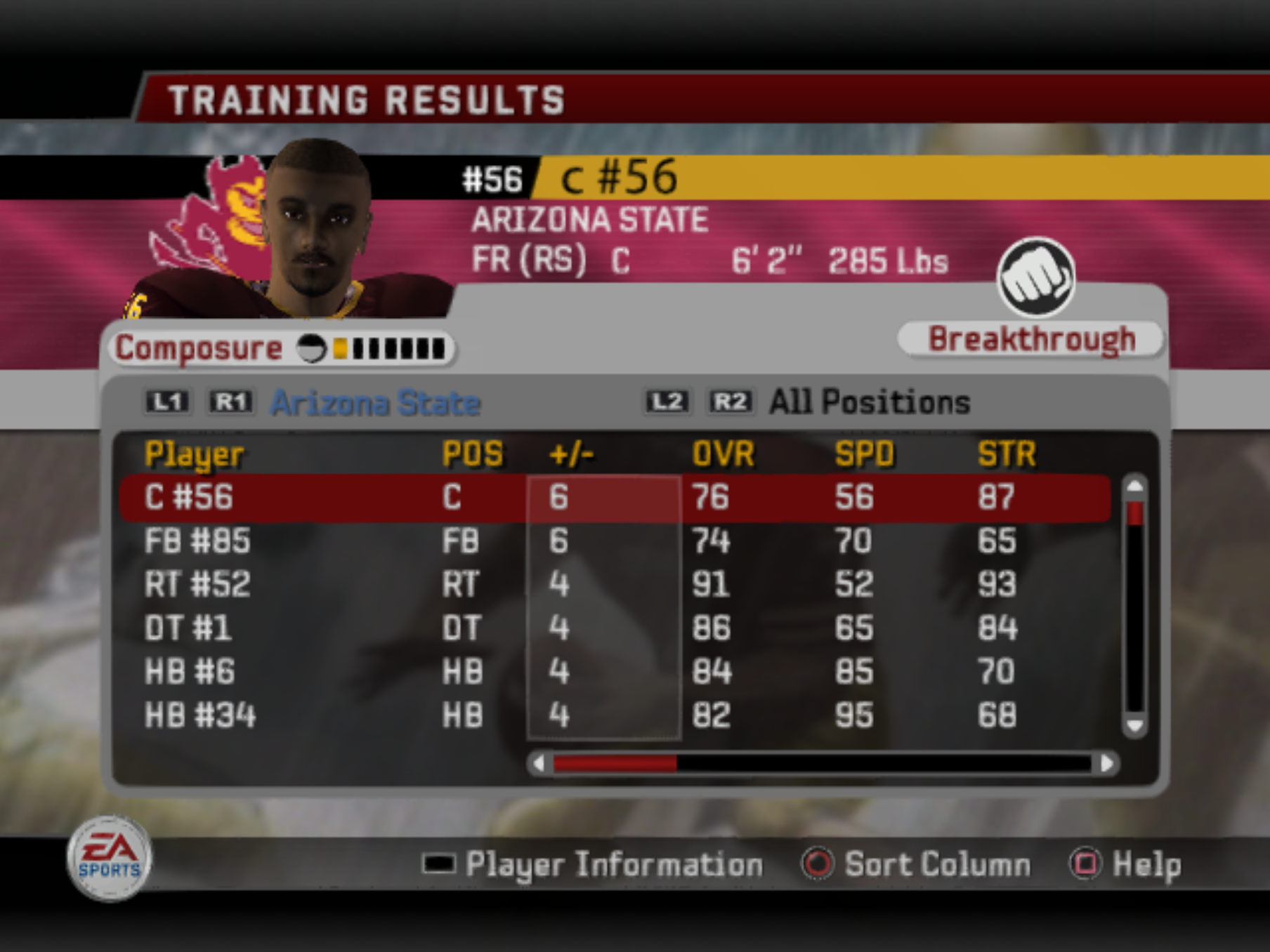
In NCAA Football 06, the training mechanics are extremely simple. Players have a certain amount of potential, and the more budget you have for training, the more you will get out of that potential. They also improve more with on-the-field success. Training helps make weaker players valuable on your team. Players will stay between 3 and 5 years on your team. They leave after 3 years if they are really talented and want to turn pro. After 4 years they are no longer eligible to play. You are able, however, to get them to stay on your team for 5 years if you “redshirt” them for a year, which means they are on your team learning but are not allowed to play. So for your “redshirt” players you may be able to take a weaker player and train them so well that they may be as good as a player who left after 3 years.
I will say that, with managing teams, this is something I think many managers fall short on. From my own experience, you can take hires who seem underwhelming at first from a talent perspective and get them productive if you are willing to train them. Even with experienced professionals, it helps to do training. It is a huge mistake to assume you can hire anyone without training them, and they will do great. If they do excel without training, then they will probably question why they need a manager since not training employees usually puts people in a position where they have to learn everything the hard way. A notable exception is a person who has no interest in doing the job. If someone does not want to do the job, it’s best to let that person go.
Finally, I think many managers underestimate how much the work they give their teams impacts their growth too. If you consistently give tasks to your team that are way too easy for them, then they’ll get bored and complacent. However, if you give them work that is beyond their skills without coaching and training you might break their confidence to a point where they will leave your team or maybe even their profession altogether. Ask me how I know.
Recruiting
Recruiting is the biggest part of dynasty mode. You can afford to have a few bad recruiting classes, but consistently failing to get the best talent means you will not have long-term success. How do you get the best talent? It is not as simple as getting the best players. NCAA Football 06 makes it so you have to be strategic about who you try and recruit. Recruits will have a certain level of interest in your school without you talking to them at all. You can try and recruit players who have no interest in your school, but it will be difficult to convince them to join your team.
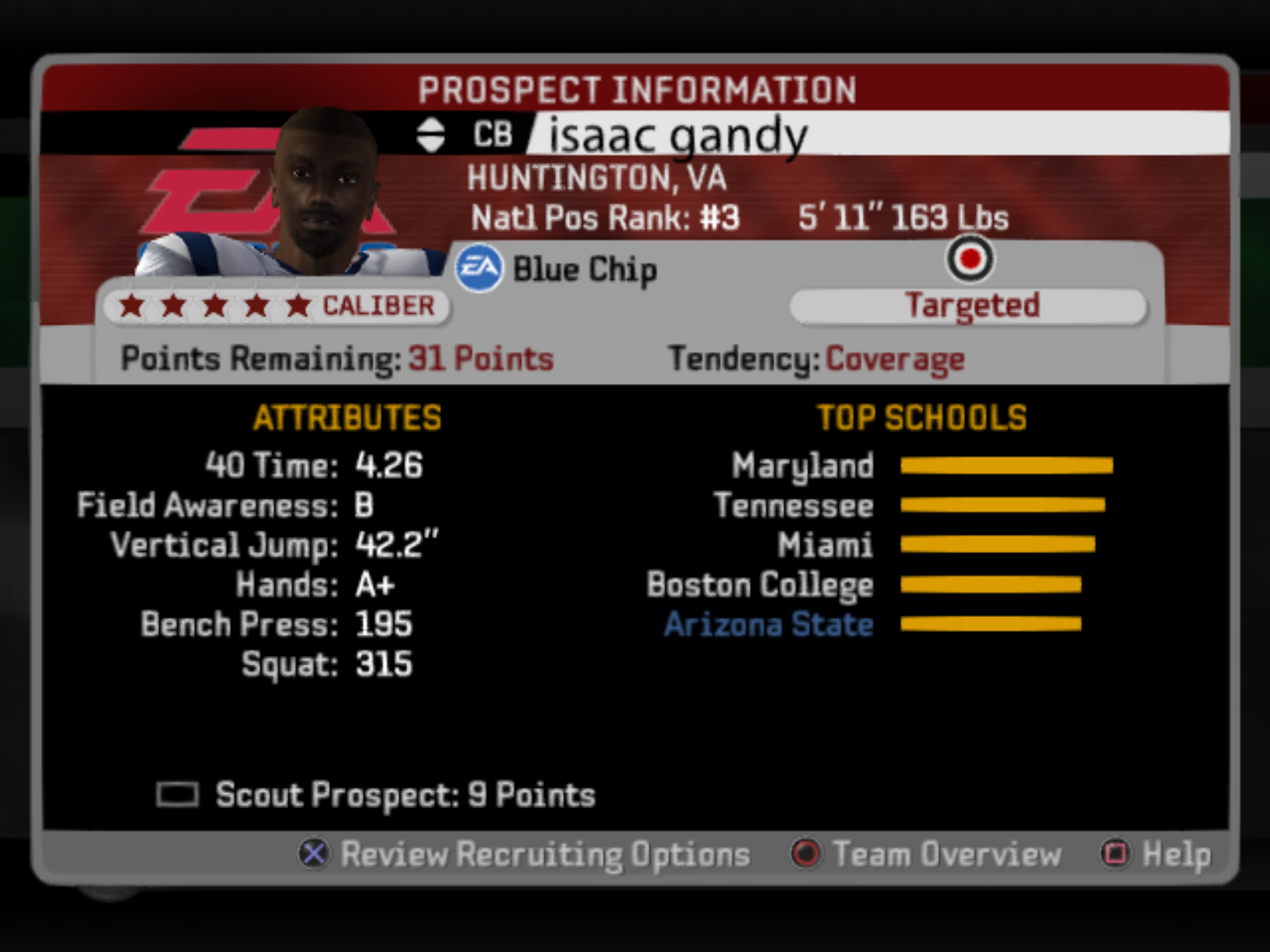
You are able to see how much interest they have in your school and the other schools they are considering. You can see their attributes, and you are also able to scout them to increase the accuracy of the numbers. Additionally, scouting also tells you how much potential they have as well as any disciplinary issues they have. Players are also ranked from 1 to 5 stars, where 5-star players are the best and 1-star players are the worst. If you fail to fill your roster with enough players, then the game will add “walk-ons,” which, in real life, are players who try out for your team and get on, but don’t have a scholarship. In the video game, walk-ons are the worst players, so you want to avoid filling your roster with them.
When building a software team, you will also have to do your own version of recruiting. The teams I have seen that have the most success finding talent are ones that are able to find people through their networks. I think this is because the managers are always “scouting” for potential talent if they need to fill a position, which means they have fewer surprises when they hire that person. This is very problematic from a standpoint of giving a diverse group of people a chance to prove themselves, but personally I have been going out of my way to meet college students so that I can potentially help them get jobs. I haven’t been doing this for long enough to report on the effectiveness of this strategy, but I’ll probably write a blog post when I feel I have enough feedback.
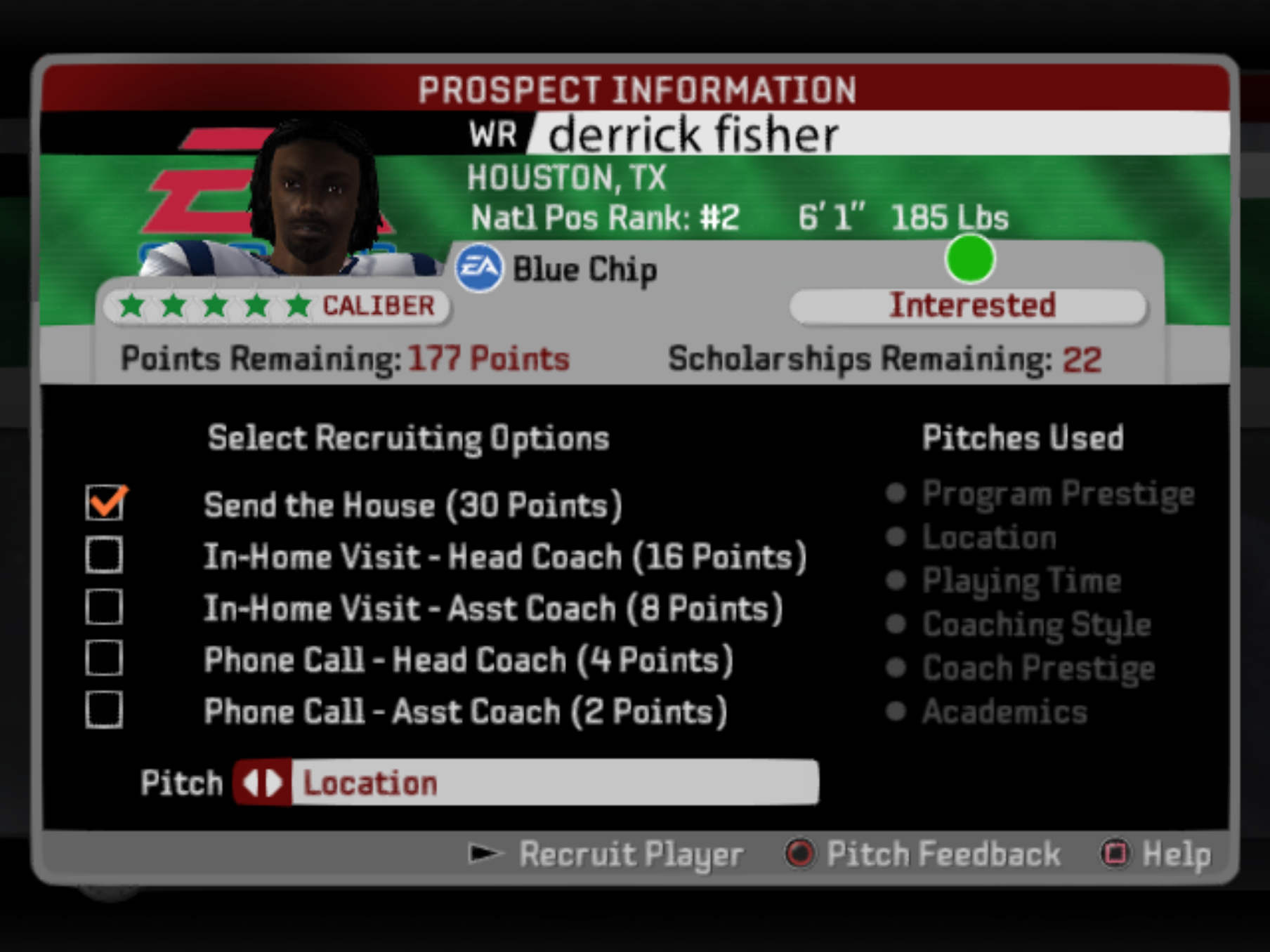
Once you determine who you want to recruit, you next have to sell the recruit on going to your team. You can choose what you talk about and how you are going to sell them on what you talk about. The cost to sell them on your team is a function of how far away they are from your school. If the recruit lives far away, then you want to only pursue them if they are very talented. You can talk to them about the following:
- Program Prestige
- Does your football team have a reputation for winning?
- Location
- Is your school close to where the recruit is from?
- Playing Time
- Will they be a starter on your team quickly?
- Coaching Style
- What plays do you like to call? Does that match the player’s strengths?
- Coach Prestige
- Do you, the coach, have a reputation for winning?
- Academics
- Believe it or not, some football players will not turn pro, so they may want to go to college to learn something.
Ideally you want to sell a recruit on an aspect of your school they are interested in, and the more desirable the recruit, the more time you should spend on them. Selling them on something they are not interested in is a waste of time and selling them on something they are interested in, but that you are weak at, is disastrous. In order to figure out what they want, you have to try different pitches and see how they react. You can infer what they are probably interested in by the list of schools they are interested in, but sometimes it’s not so obvious.
In management, one of the most important things you must do is figure out what potential employees want from a job as well as the existing members of your team. For me, one of my recruiting advantages is that my team is mostly remote. I think too many companies have foolishly enforced return to office plans without thinking about how much that will negatively impact their ability to get the best people. There are good reasons to have people come into the office in the world of software engineering, but that doesn’t mean people have to be in the office most days.
Conclusion
Why is it possible for hospitals to have good software engineers? From the management perspective, like in NCAA Football 06, it comes down to a few factors: a manager’s ability to find people who really want to do the jobs they can offer, to train their people, to follow and enforce a fair set of team rules, and to still be effective with limited budget resources. Overall, since our mission is to cure cancer patients, it attracts software engineers who want to help others. Those are the same kinds of people who are willing to train and develop others. If I had to guess, most of the software engineers who work at our hospital do not start off stronger, but since they, on average, get better support, they are able to grow much faster. That said, we have bad managers just like any other company, but the mission lends itself well to attracting people who have the skill to make teams overachieve. Other companies can offer the latest technology and extremely high salaries, but to me, it is less impressive when they succeed. Anyone can succeed when they work in the most prestigious tech companies with the highest budgets. I think what I love most about managing a successful software engineering team at a hospital is that I know my team can leave for other places, and yet they choose to stay. It makes me feel the same way I used to feel when I was able to coach small schools in NCAA Football 06 so well that they were able to win national titles. Maybe my mom was wrong, spending all that time in front of the TV was good for me.