No, Prompting AI Agents Does Not Make You a Manager
Lessons from My First Job Out of College
TL;DR
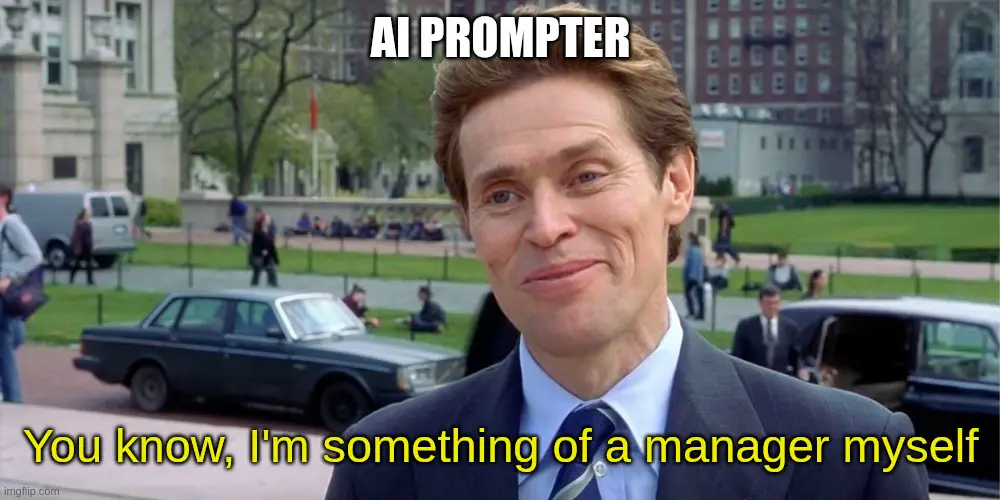
Great management is about building trust with your team and dealing with problems decisively. It is not like prompting an AI, where all that matters is telling the AI what to do.
Introduction
In mid-2014, I was working as a chemical engineer drawing construction plans for landfill gas cleanup systems. I was living in Phoenix, Arizona, and it was 5 p.m. on a typical 120°F (49°C) Friday summer day. I had just left the office. As I was getting into my car, avoiding touching the metal in my seat belt so I wouldn’t get burned, I turned the ignition as a blast of hot, dry air came from the AC, which was struggling to handle the desert heat. It was then that I was faced with a sudden dread that I’d have to go to work on Monday. That week, I had accomplished something I hope I’ll never do again: I got absolutely no work done. This might sound like a dream job to some, but I hate the idea of wasting my life avoiding challenges. The worst part of it was that I could not will myself to care about work. I simply listened to ESPN radio as they went on about the implications of LeBron James leaving Miami to go back to Cleveland. For the record, I was listening to so much ESPN radio at this job that I had even memorized when each ad break was, so I knew when to mute my phone. I wanted to do a good job, but kept falling short and upsetting clients. After over a year of getting negative feedback about my work from clients, my body refused to let me force myself to work. I was burned out.
This was my first job out of college, and I had no idea what a career job was supposed to look like. When I first started, I was told to learn AutoCAD, a relatively complicated piece of software used to draw construction plans, in a week. Also, my background was in chemical engineering, not civil engineering, so I never took a class on how to put construction plans together. Unsurprisingly, I made a lot of mistakes. I learned from them, but it was embarrassing to submit plans to a client and have them filled with red marks, with comments like, “Did your manager even read this?” My manager should have been more thorough when reviewing my work, but I still took it personally. I pushed myself through this until, in the summer of 2014, my mind refused to let me work.
I eventually left that job in 2015 to move to New York. The experience left me so burned out that I went on to pivot into software engineering after a few years of unemployment, but after having over a decade to reflect on that period, I now realize that my boss, while being a genuinely wonderful person, had much to learn about management, and I was painfully unaware of all the things I could have been doing to help him understand that I was struggling with confidence and motivation.
Often people say prompting AI agents is like managing people, but all the issues I had with motivation and burnout are things you will never have to deal with when working with an AI agent. AI agents have no personalities, at least not in the human sense of the word. They simply use probability and statistics to predict a string of characters that will most likely complete your prompt.
Why Does This Misperception Exist?
So why do people think that all managers do is give their people a detailed plan and then have their people execute the plan? I think it’s because most people haven’t actually had a good manager. Most managers are not well-trained, if they’re trained at all. They generally think they have to tell the team what tasks need to be done and make sure they get done. If this is your view of management, then yes, AI prompting is management, but I think this is why so many workplaces struggle to retain talented people. You, as a manager, are not offering your direct reports anything of value if you simply tell them what to do or tell them that they are doing a bad job. People generally hate having no creative freedom in their work, and they usually know when they are not doing good work.
What Makes a Great Manager?
There are plenty of good books out there that go into great detail about how to lead and manage, so I don’t see a point in going into too much detail in a blog post. For the record, I believe every manager should dedicate time to improve their management skills through books and classes every year. I have some of my personal favorites linked at the end of this post, but I digress. To put it simply, I think what makes a great manager is someone who ensures their team can trust them. It sounds obvious, and it is, but as they say, “the devil is in the details.” Let’s go back to my experience putting construction plans together to evaluate how things could have gone better.
Why Was I Bad At My Job?
I think there were two main issues that were not dealt with effectively.
- I was not qualified to plan a construction project. This made me feel overwhelmed by everything I had to do, and I had no idea how to do a good job.
- I thought it was completely my responsibility to improve my job performance.
I can imagine a world where I actually had the self-awareness to know how to fix my weaknesses without any help, but alas, I did not. This alone is an important lesson about management. Your direct reports will not always know how to fix their flaws. You have to work with them and iterate until you find an approach that works for both of you. It would be great if every employee knew how to do their job without any help, but at that point there would be very little need for managers. Now, let’s break down each of these issues.
I Was Not Qualified
It hurts to say, but I was not qualified for my job. I did well at the minor parts of my job, such as regulatory reporting, but I was not very good at the main part, which was creating construction plans. I did grind daily to get better by watching YouTube videos and practicing ways I could have done things differently on old projects, but this was extremely inefficient. I did not know what was important and what was not important for doing the job well. My manager’s approach to teaching me was handing me files of old projects and asking me to just copy the approach. The issue with this was that I was missing the context of how decisions were made and still did not know how the drawings were put together using AutoCAD. The consequence was that I produced low-quality construction plans that made me look like a useless employee, which was a huge ego hit. This is a mistake I see many other managers make. Yes, your direct reports should take ownership of their own learning, but you, as the manager, can guide their learning and help them avoid embarrassing the company and themselves. I did eventually learn how to do an acceptable job at putting plans together, but it was at great cost to my self-esteem.
I Thought It Was My Fault
I took responsibility for my failures. I did not want to blame my manager because ultimately it was my work, but this view was harmful. Yes, it was my work, and I also worked at a company with other engineers who could have easily helped me get better, but I wanted to be able to overcome my issues on my own. The management lesson here is that you need to make sure your direct report feels they can talk to people if they are stuck. Everyone deals with all kinds of insecurities, so you need to be proactive in facilitating communication and trust. Many managers feel they are too busy to worry about these kinds of things, but all that means is that your direct reports will take longer and produce lower quality work simply because they are too embarrassed to ask for help. The best thing to do is to have one-on-ones where you let your direct report control the meeting. Do not make a one-on-one a status report meeting. It is much better to spend the time to get to know them on a more personal level. This is important because you want to make them feel like they can tell you anything. Be genuinely interested in their lives when you get to know them on a more personal level. The worst thing you can do is to pretend to care about your direct reports’ lives. You will not fool them even if they don’t tell you to your face, and you will absolutely kill trust. Even more importantly, when an issue is brought to your attention, you must act decisively to deal with it. Usually, people will not tell you about big issues first. They tend to start with minor issues to see how you respond. Failure to fix minor issues all but ensures you will be blindsided by a major one. Do not assume all is well if you don’t hear about problems. One-on-ones are a great way to be proactive in finding out issues before it’s too late.
My Advisors
Now you might think that this is a lot of work to deal with your team’s well-being as a manager, and you’d be right. Some of you might even prefer to work with an AI since it’ll just do what it’s told, and you don’t have to talk about it getting bored because it doesn’t feel like it’s advancing in its career, but I think you miss out on something that’s great about working with real humans. You miss out on having a team of advisors. When your team trusts you, they become your team of advisors. I often find myself avoiding a lot of mistakes simply because my team feels like they can tell me when I don’t know what I’m doing. They obviously say this in a much nicer way, but they still do it. That is something I value about working with humans over AI. When I come up with an idea, AI will never question it, but when I ask a human, especially one who knows I’ll listen to them, I know I have actually earned any approval I get from them.
I think that’s why I love being a manager. I love building a team culture that rewards people for speaking their minds. It feels like every idea really has earned the right to exist.
Closing
When I got a job as a software engineer, I asked my manager for a reference. He told me “What a waste”, meaning that he thought I was a great engineer and I shouldn’t have changed careers. I might have been too hard on myself or maybe my manager set the bar too low for me, but while I worked under him, I always knew I was capable of more and couldn’t seem to achieve it no matter how hard I tried. That’s something I always keep in the back of my mind as a manager. Currently, I’m very happy with where I am in life, but there’s a good chance I’d still be putting construction plans together for landfills if my manager had a better pulse on my confidence or if I had known how to be more emotionally vulnerable.
References
- The Manager’s Path: A Guide for Tech Leaders Navigating Growth and Change
- This is my favorite, but it’s geared towards people in tech.
- High Output Management
- Leaders Eat Last: Why Some Teams Pull Together and Others Don’t
- Who Says Elephants Can’t Dance?: Inside IBM’s Historic Turnaround
- Superhero Leadership: 28 Ways to Lead with Courage, Strength, and Compassion
- I hated the stupid superhero references, but the content was good.