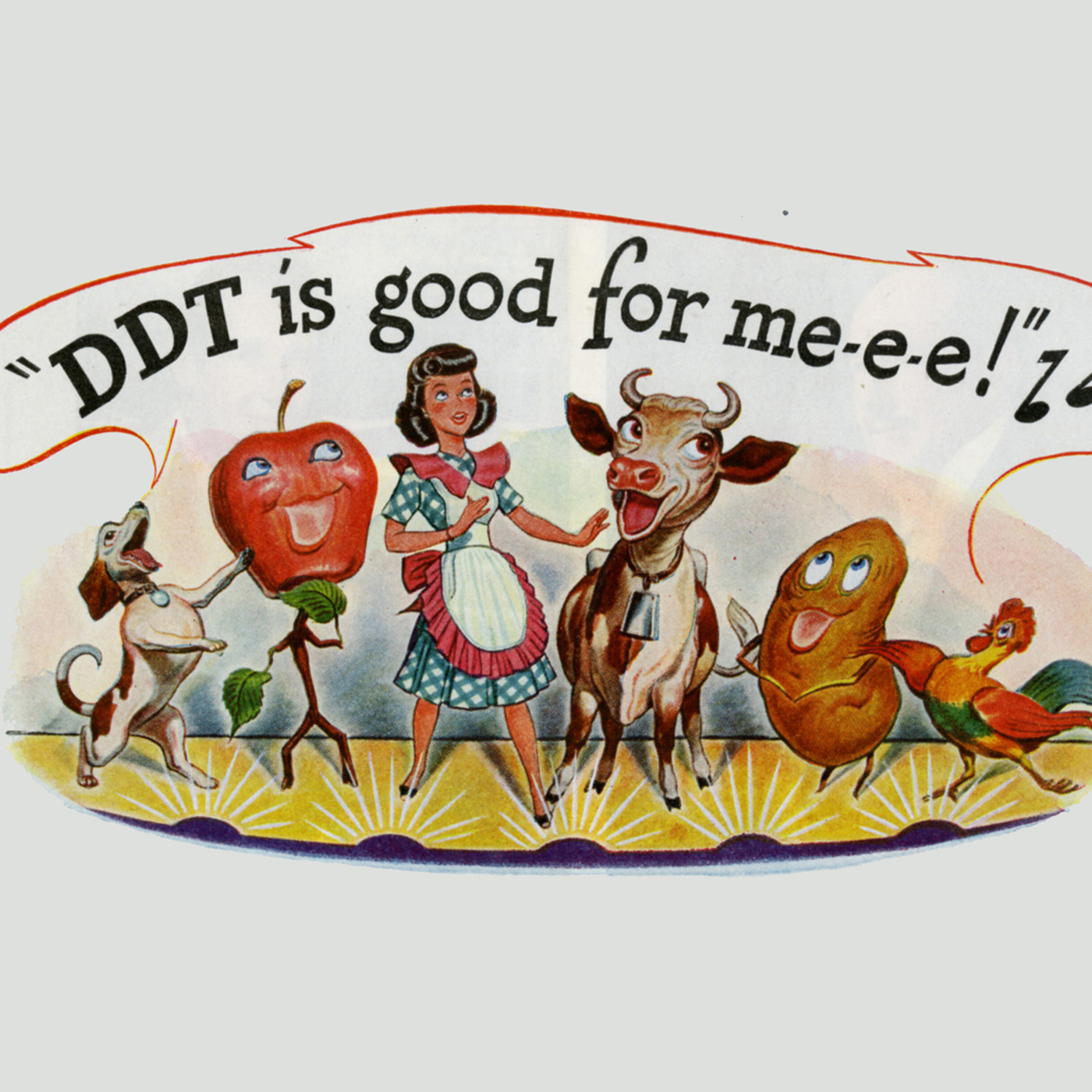
AI Is Good For Me-e-e!
The Case for Strict Regulation of Software Engineering
TL;DR
Software has the power to do both good and evil things. The past few decades have shown great progress in the ability to do seemingly anything with just a smartphone and an internet connection, but there is a dark side. From having no respect for people's privacy to AI spreading fake news, it has become increasingly profitable to do the wrong thing. We as professional software engineers should demand higher ethical standards that are enforced not only by laws, but by each other.
Introduction
‘DDT will kill the bees and that means that it will kill the clover, which means, too, that it will kill off our livestock,’ he warned. ‘It will destroy the fruit crops which are dependent on bees for pollenization! It will kill most of the flowers for the same reason and will wipe out many of our vegetables.’ He concluded, ominously, that DDT ‘has the power to ruin us.’
But Cope had other observations to share as well. The pesticide had eliminated the bugs pestering his mules, dairy cows, Scottish terrier, cat, and pig; and it seemed to be keeping the bugs from coming in through cracks and crevices in his windows and walls. Although its downside was undeniable, he wrote that DDT was also a ‘great tool for our betterment.’
- Beyond Silent Spring: An Alternate History of DDT, Elena Conis, 2017
I just read this article Beyond Silent Spring: An Alternate History of DDT, and I found it eerily similar to our experience with the state of software today. Software today is simultaneously making our world both a better and worse place.
For those of you who do not know, Dichlorodiphenyltrichloroethane (DDT) is an insecticide that was, stop me if you have heard this one before, celebrated as a miracle chemical with little downside, at least by the companies producing it. DDT was used extensively to prevent the spread of diseases such as malaria and typhus during the Second World War. After the war, DDT was sold widely on the domestic market, but its overuse became problematic after it was observed that DDT causes liver and neurological damage in humans. In addition to insects, it is toxic to fish and birds too. Concerns about DDT reached a high point when Rachel Carson, a marine biologist, wrote a book in 1962 about her concerns, Silent Spring. Her book created political pressure to create the U.S. Environmental Protection Agency (EPA), which ultimately led to banning the use of DDT in the United States. Arguably, DDT probably should not have been banned outright, but because the chemical companies failed to find ways to compromise early in terms of limiting the use of DDT, they put themselves in a position for an overcorrection to happen. DDT is very effective when a community is faced with serious illnesses such as malaria, but it probably should not be used for common house pests due to how toxic and long-lasting it is.
The crusade to create a chemically sterile, insect-free world seems to have engendered a fanatic zeal on the part of many specialists and most of the so-called control agencies. On every hand there is evidence that those engaged in spraying operations exercise a ruthless power. ‘The regulatory entomologists…function as prosecutor, judge and jury, tax assessor and collector and sheriff to enforce their own orders,’ said Connecticut entomologist Neely Turner. The most flagrant abuses go unchecked in both state and federal agencies. It is not my contention that chemical insecticides must never be used. I do contend that we have put poisonous and biologically potent chemicals indiscriminately into the hands of persons largely or wholly ignorant of their potentials for harm. We have subjected enormous numbers of people to contact with these poisons, without their consent and often without their knowledge. If the Bill of Rights contains no guarantee that a citizen shall be secure against lethal poisons distributed either by private individuals or by public officials, it is surely only because our forefathers, despite their considerable wisdom and foresight, could conceive of no such problem.
I contend, furthermore, that we have allowed these chemicals to be used with little or no advance investigation of their effect on soil, water, wildlife, and man himself. Future generations are unlikely to condone our lack of prudent concern for the integrity of the natural world that supports all life. There is still very limited awareness of the nature of the threat. This is an era of specialists, each of whom sees his own problem and is unaware of or intolerant of the larger frame into which it fits. It is also an era dominated by industry, in which the right to make a dollar at whatever cost is seldom challenged. When the public protests, confronted with some obvious evidence of damaging results of pesticide applications, it is fed little tranquilizing pills of half truth. We urgently need an end to these false assurances, to the sugar coating of unpalatable facts. It is the public that is being asked to assume the risks that the insect controllers calculate. The public must decide whether it wishes to continue on the present road, and it can do so only when in full possession of the facts. In the words of Jean Rostand, ‘The obligation to endure gives us the right to know.’
- Silent Spring, Rachel Carson, 1962
It is interesting to see how similar Rachel’s concerns about the treatment of the environment are to many people’s concerns about the way software engineering is done today. Specifically, her statement that “It is also an era dominated by industry, in which the right to make a dollar at whatever cost is seldom challenged.” seems especially relevant to the way many tech companies operate today. They do things like perform psychological experiments on social media platforms, sell your driving habits to insurance companies, and remove features from devices bought and paid for to name a few. Normally, the excuse is something like “you accepted the terms of service” while conveniently ignoring the fact that almost no one has the time to read all the terms and services they are bombarded with on a routine basis. Even if they did, terms of service are often updated long after you start using the product, which means it is even more difficult to stop using it if you disagree with the terms. South Park made a pretty good joke about this exact problem a while ago. To me, this excerpt is weirdly comforting because we know that this book inspired the creation of the EPA. While the EPA is not without its flaws, it still exists. It is a government agency that is supposed to make it profitable to care about the environment. Unfortunately, we have no equivalent agency for software. That said, it may feel like there is no political will to increase the regulation of software, but as the book Silent Spring shows, that can change quickly based on even just a single person’s actions.
Data Pollution At Scale
In high school and college, I used to listen to the alternative rock band Rise Against all the time. I was listening to some of their newer songs, specifically “Talking to Ourselves”, but it took on a new meaning as I was putting together this blog post.
I never wanted to disturb the peace. But it feels like no one’s listening. Are we talking to ourselves? Are we just talking to ourselves?
- Rise Against, “Talking to Ourselves”, 2021
Knowing how generally anti-establishment Rise Against is, which makes them perfect for angsty teens, they were probably directing their anger toward the government, but I could not help but feel like software was also part of the problem. Studies are coming out that things like social media and dating apps have negative effects on people’s mental health. I cannot help but feel that when you engage with apps designed to make you angry and dissatisfied with life in order to drive engagement, and the content is personalized so that other people are not seeing the same issues and problems you see, it can feel like no one is listening, to the point that you are talking to yourself. You may even become so radicalized that you might, as Rise Against puts it, disturb the peace even though you never meant to do that. This isolation has gotten so bad that the former U.S. Surgeon General declared a loneliness epidemic.
In the same way chemicals, such as DDT, can pollute and cause harm to the environment, so can toxic data in our virtual environment. It can come in the form of fake news that makes people depressed and anxious, in the form of low-effort resumes and low-effort reviews of those resumes, and in the form of an AI romantic partner or therapist that never truly challenges you to be a better version of yourself. Not to mention the e-waste generated by poorly written software that forces people to upgrade their machines simply because they mistakenly believe the hardware is too slow.
But It Comes With A Terrible Curse
I am sure many of you got into software for the same reason I did; it was fun to take control of a machine and have it do powerful things where seemingly your imagination was the limit. I am sure the desire to help make people’s lives better in some way while doing something you love for a big paycheck was irresistible. Funny enough, I remember when I first heard about people protesting big tech companies in the mid-2000s and thinking, “How is big tech something worth protesting about?” These days I find myself no longer wanting as many tech gadgets like Meta’s AI Glasses, not because I cannot afford them or because I am not interested in the technology, but because it feels like my data will inevitably be sold to the highest bidder.
I do not see a reason why everything with software has to have a terrible downside to using it. I believe our industry needs rules and regulations which force companies to be held to a higher standard that is more aligned with the public good. I also see no reason why we cannot have higher ethical standards for software engineers. I often hear people in our industry say something to the effect of “Web applications are not the same as building bridges because there are no life-and-death consequences”, but even simple websites can have dire mental or even physical health consequences if the information on the site recklessly disregards reality.
It Starts With You
We, as software engineers, are in the best position to change our world for the better. Almost everything done today involves a piece of software running. We must not accept that we are powerless to do anything about this. You can do things like speak up when you know something you are being asked to do is morally questionable and refuse to write code or maintain code you know is actively harming people. If you are stuck with a company you know is not ethical, you can still actively tell all the good software engineers you know personally not to work at your company. We have all seen the layoffs in tech due to AI, and there is no reason to believe that if you “keep doing what you’re told,” your job will be safe in the future.
In the end we all will get old and will have to live with the consequences of our actions. I have been in positions in my life where I’ve left jobs or held my ground when I felt that what I was being told to do was not ethical even though it was legal. To be honest, in the short term, I have regretted some of these decisions, but in the long term I am proud of myself because I had integrity even when it was the hard choice. I am human, and I do fall short at times, but on the whole I feel like I have and continue to do my part to make this world a little better.
I believe, even given recent global events, the future of our world is bright and software will be a big part of that, but we, as the people who actually create the software, have a moral obligation to stand together and demand a higher level of professional integrity from each other. In this way, we can avoid a massive public backlash that sets our industry back decades.